Open today · 08:00–17:30

Kamakura Enoshima Day Trip From Tokyo

Kamakura Enoshima Day Trip from Tokyo — Coastal Temples & Island Shrines

Ancient temples meet island views, one train ride away

50K+ travelers chose this
Free Cancellation
Right now: Moderate — autumn shoulder season Arrive by 09:00 for the most serene viewing of the Great Buddha.
Free Cancellation
Instant confirmation Free cancellation Mobile voucher Verified partner Skip-the-line
13.35 m
Height
Great Buddha stature
93 tonnes
Weight
Approximate mass of statue
1252
Construction year
Kamakura period origin
National Treasure
Status
Official government designation
Choose your ticket

Kamakura Enoshima Day Trip From Tokyo tickets at a glance

Compare fares, pick the fit — all bookings are mobile-voucher and eligible for free cancellation where shown.

Kamakura & Enoshima Day Trip from Tokyo with Enoden Train 10 hr
Guided Experience

Kamakura & Enoshima Day Trip from Tokyo with Enoden Train

4.6 (474)
€51
  • Expert local guide
  • Small group
  • Skip-the-line access
  • Free cancellation
Book this ticket
Kamakura & Enoshima Coastal Discovery with Optional Yokohama Extension 11 hr
Guided Experience

Kamakura & Enoshima Coastal Discovery with Optional Yokohama Extension

4.6 (44)
€51
  • Expert local guide
  • Small group
  • Skip-the-line access
  • Free cancellation
Book this ticket
Compare options

Compare Kamakura Enoshima Day Trip From Tokyo ticket options

Selecting the right access level for your kamakura enoshima day trip from tokyo is straightforward, as the site offers simple entry tiers to experience the historic Daibutsu. Whether you prefer a standard stroll through the temple grounds or wish to include the unique internal viewing, these options provide flexibility for your visit.

General Grounds Entry Standard access Top pick
Grounds + Interior Access Includes statue entry
Entrance fee 300 JPY
Access method On-site ticket kiosk
Internal viewing Not included
Opening hours 08:00–17:30
Best for Budget-conscious visitors

Verdict: For the most complete experience on your kamakura enoshima day trip from tokyo tours, select the Grounds + Interior Access ticket.

Is the Great Buddha Worth Including on Your Kamakura Enoshima Day Trip From Tokyo?

Worth it for heritage and coast seekers

A kamakura enoshima day trip from tokyo delivers exceptional value by combining two distinct experiences within one coastal journey. The Great Buddha itself costs just 300 JPY—less than a Tokyo coffee—yet grants access to one of Japan's most iconic bronze monuments, a 13th-century masterpiece standing 11.3 meters tall. While Kotoku-in temple focuses primarily on this single statue, the broader itinerary pairs Kamakura's ancient temples and shrines with Enoshima's seaside caves, shrine complex, and coastal views. Organized Kamakura Enoshima tours from Tokyo handle transit logistics via the scenic Enoden train, eliminating the guesswork of independent navigation. The 300 JPY admission represents honest pricing—you're paying for cultural significance and serene temple grounds, not elaborate exhibits. Early arrivals between 08:00–09:00 maximize tranquility before tour groups arrive. This dual-destination format suits travelers who want both spiritual landmarks and natural scenery without committing separate days to each location. The Great Buddha remains photogenic and historically meaningful, though the temple grounds are compact—budget 30–40 minutes here before continuing along the Shonan coastline.

What makes it worth it

  • 300 JPY admission costs less than Tokyo transport
  • Iconic 13th-century bronze Buddha with interior access
  • Compact temple allows efficient dual-destination itinerary
  • Scenic Enoden train ride connects both locations
  • Early morning visits avoid peak crowds entirely

Keep in mind

  • Temple grounds are small, visit lasts under 40 minutes
  • Midday crowds reduce photo opportunities significantly
  • Limited English signage at the site

Bottom line: The kamakura enoshima day trip from tokyo works because low individual admission prices and efficient transit let you combine two worthy destinations in one coastal excursion.

Head to head

Kamakura Enoshima Day Trip vs Hakone — Which Is Better?

They complement each other; most visitors who do both call Kamakura and Enoshima the more accessible coastal alternative to the mountainous Hakone circuit.

Top pick
Kamakura & Enoshima
Hakone
Primary draw
Travel time from Tokyo
Transport style
Effort level
Ideal for
Best booked as

Verdict: Choose Kamakura and Enoshima for a predictable, relaxed coastal day, or pick Hakone if you prefer a mountain-and-onsen adventure that relies heavily on clear weather for the best experience.

Featured Experiences

Popular Kamakura Enoshima Day Trip From Tokyo tours & activities

Hand-picked experiences loved by thousands of travelers

Recommended Experience

Powered by GetYourGuide

Another traveler favorite

Powered by GetYourGuide
Kamakura & Enoshima Coastal Day Trip with Enoden Train Ride 10 hours Free Cancellation

Kamakura & Enoshima Coastal Day Trip with Enoden Train Ride

Journey to Kamakura's ancient Buddha, ride the vintage seaside railway, and explore sacred Enoshima Island

5 (2)
FromFrom €48.83
See details
Kamakura & Enoshima Island Day Trip from Tokyo with Enoden Train 10 hours Free Cancellation

Kamakura & Enoshima Island Day Trip from Tokyo with Enoden Train

Journey to coastal Kamakura and mystical Enoshima Island on a 10-hour guided tour featuring a vintage train ride

4.3 (92)
FromFrom $56.76
See details
Kamakura Day Trip: Great Buddha, Temples & Bamboo Forest 8 hours Free Cancellation

Kamakura Day Trip: Great Buddha, Temples & Bamboo Forest

Journey from Tokyo to historic Kamakura to explore ancient temples, serene gardens, and coastal beauty

4.9 (22)
FromFrom €215.96
See details
Kamakura & Enoshima Private Day Tour from Tokyo 9 hours Free Cancellation

Kamakura & Enoshima Private Day Tour from Tokyo

Journey through ancient temples, coastal shrines, and seaside charm in premium luxury transport

5 (9)
FromFrom €257.46
See details
Kamakura & Enoshima Private Day Tour from Tokyo 10 hours Free Cancellation

Kamakura & Enoshima Private Day Tour from Tokyo

Spend a full day exploring ancient temples, coastal shrines, and seaside charm with your own guide

4.9 (45)
FromFrom $397.95
See details
Kamakura & Enoshima Island Private Day Trip from Tokyo 9 hours Free Cancellation

Kamakura & Enoshima Island Private Day Trip from Tokyo

Discover ancient temples, a towering Buddha, and a scenic island on this customizable private tour

4.9 (15)
FromFrom €305.18
See details
Private Kamakura, Enoshima & Yokohama Day Tour from Tokyo 10 hours Free Cancellation

Private Kamakura, Enoshima & Yokohama Day Tour from Tokyo

Explore ancient temples, coastal islands, and vibrant cityscapes on this fully customizable private excursion

5 (10)
FromFrom €310.59
See details
Kamakura & Enoshima Coastal Heritage Tour from Tokyo 8 hours Free Cancellation

Kamakura & Enoshima Coastal Heritage Tour from Tokyo

Journey by train to ancient temples, the iconic Great Buddha, and a scenic island getaway with bay views

FromFrom €107.33
See details
What you'll see

What you'll see at Kamakura Enoshima Day Trip From Tokyo

Great Buddha of Kamakura

Great Buddha of Kamakura

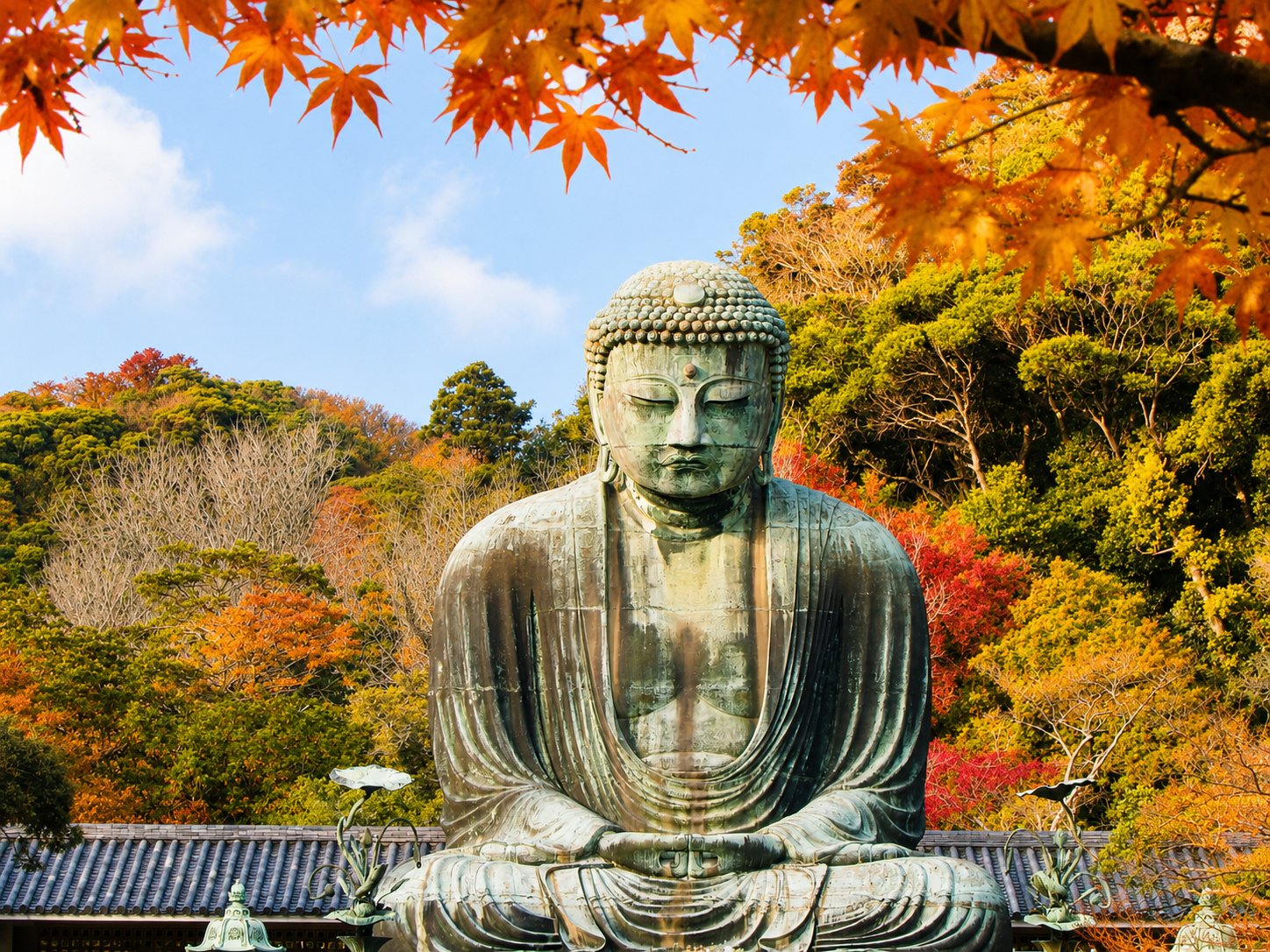
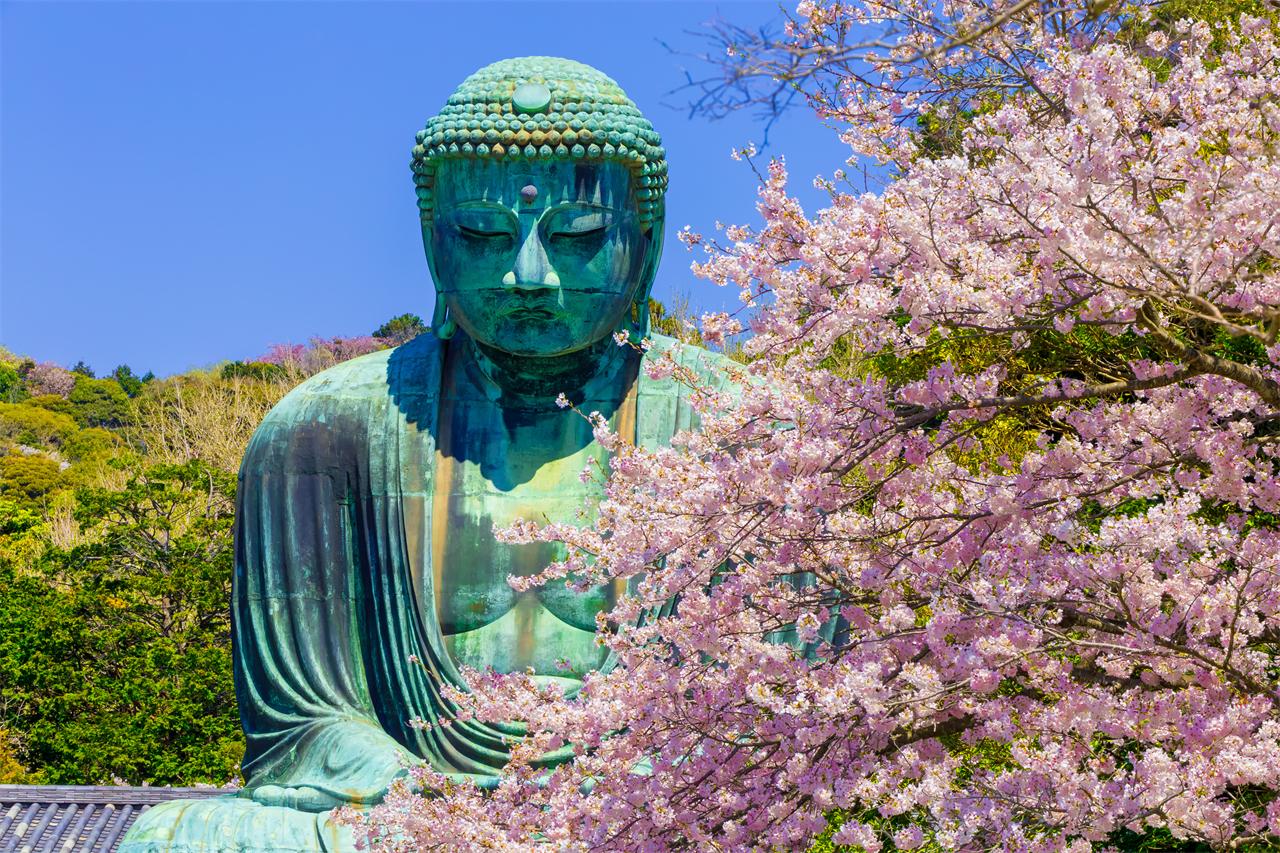
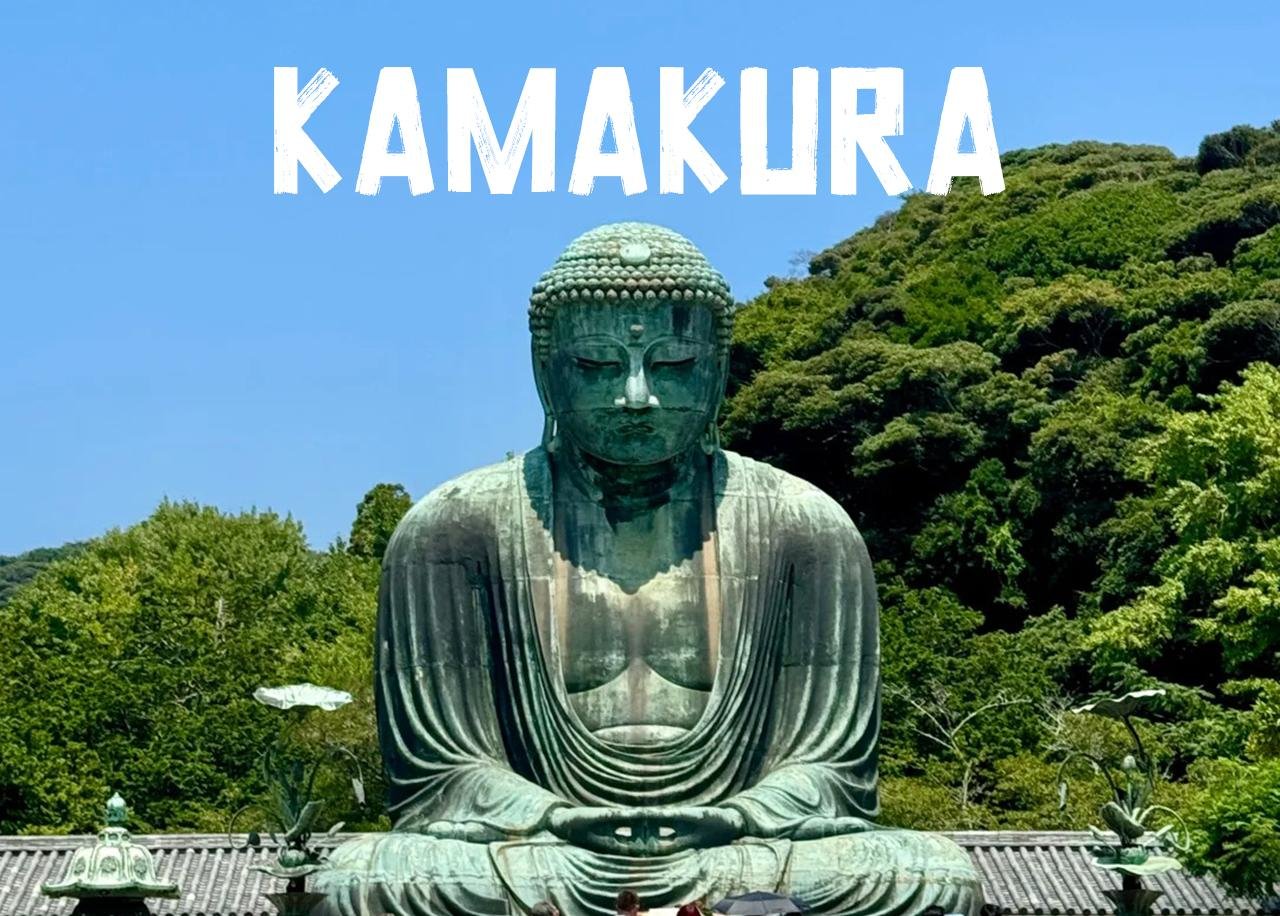
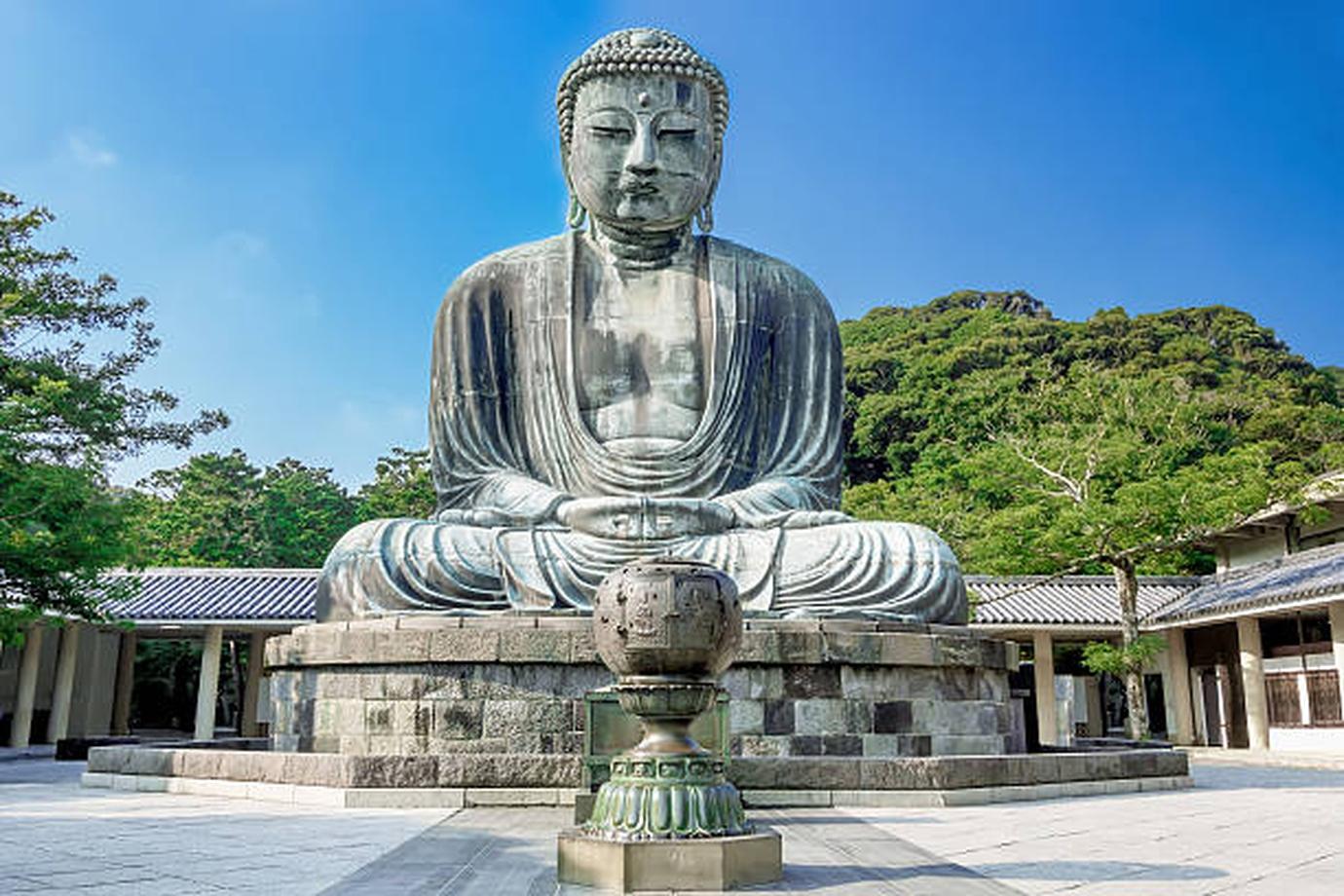
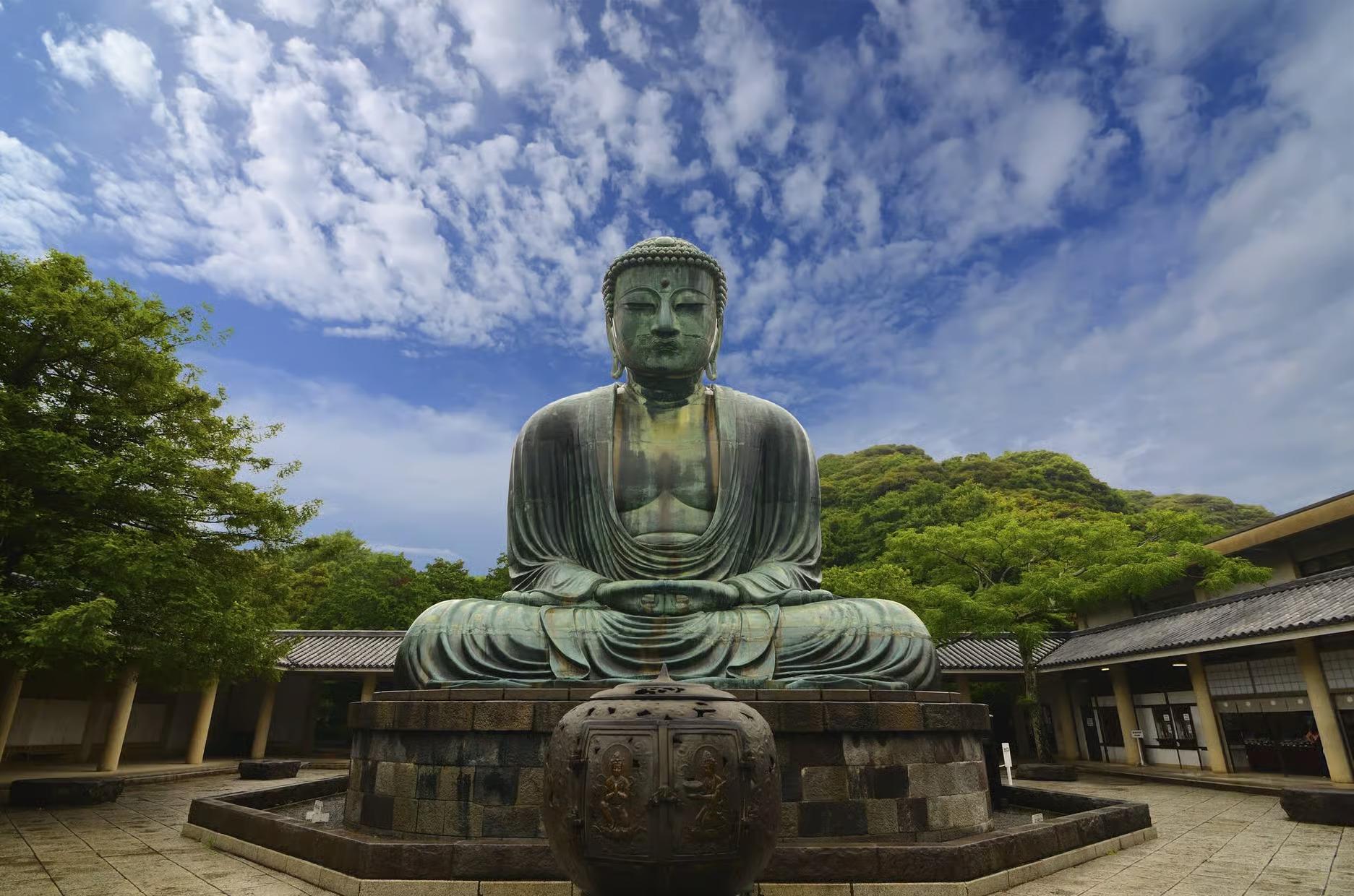
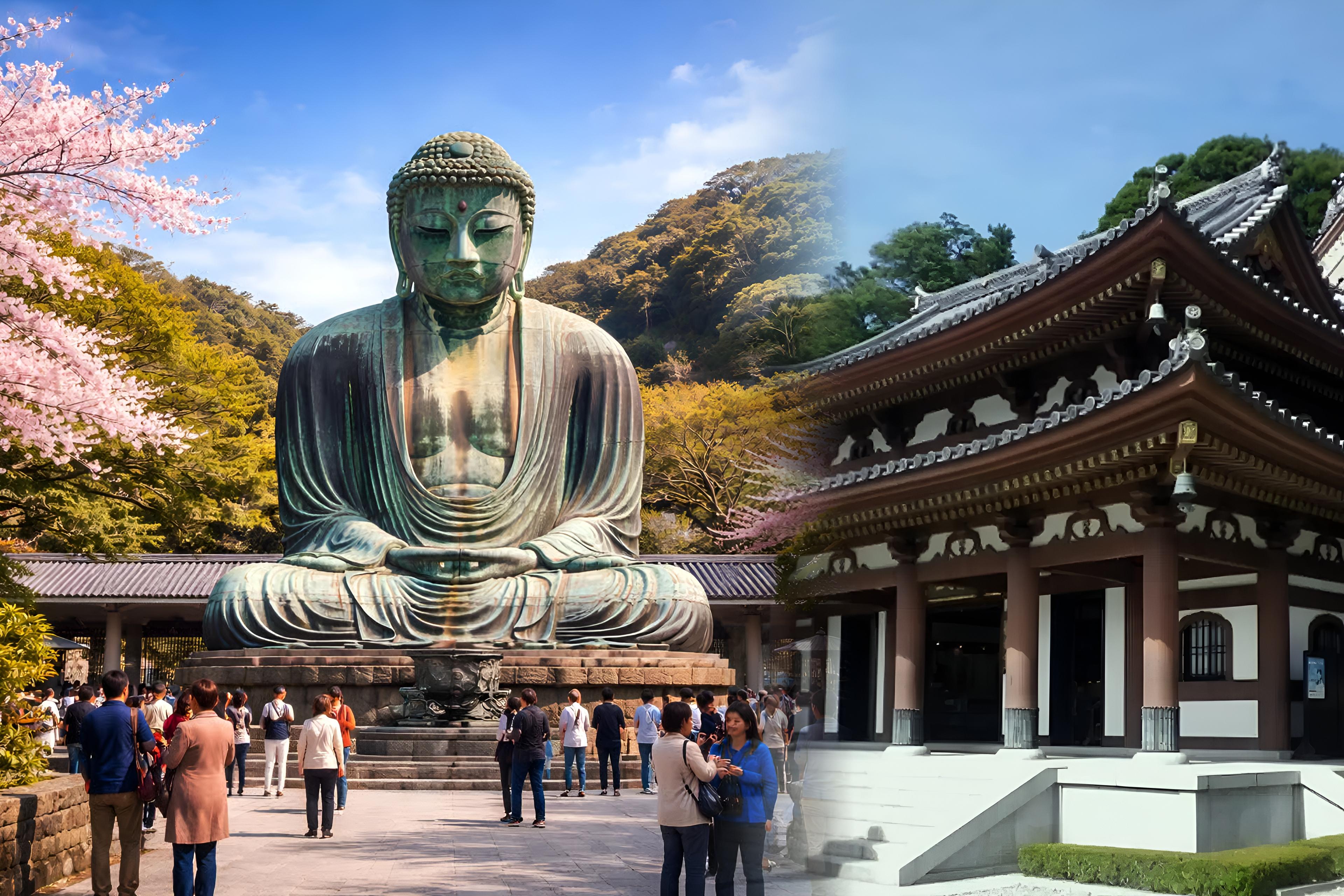
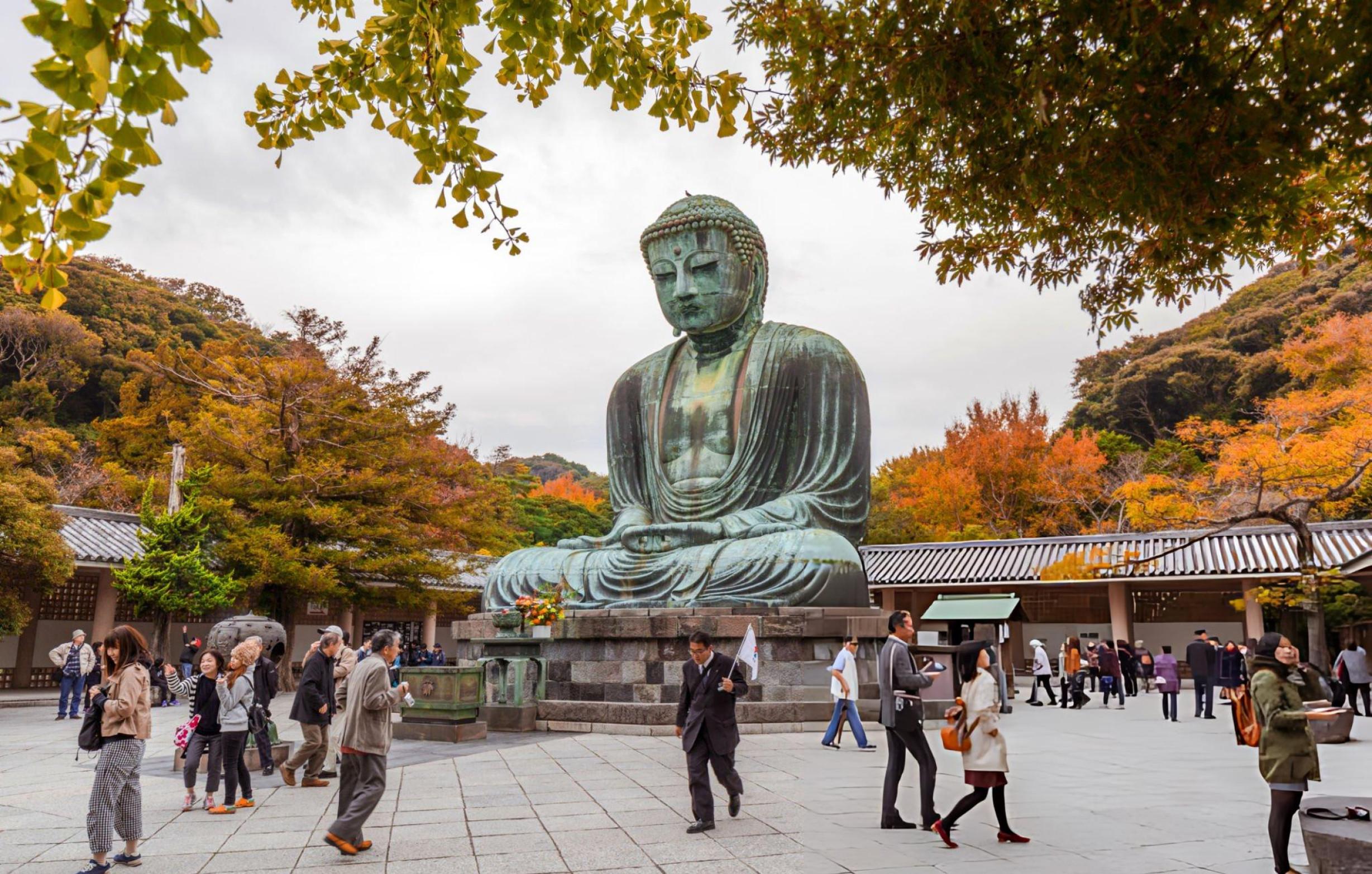
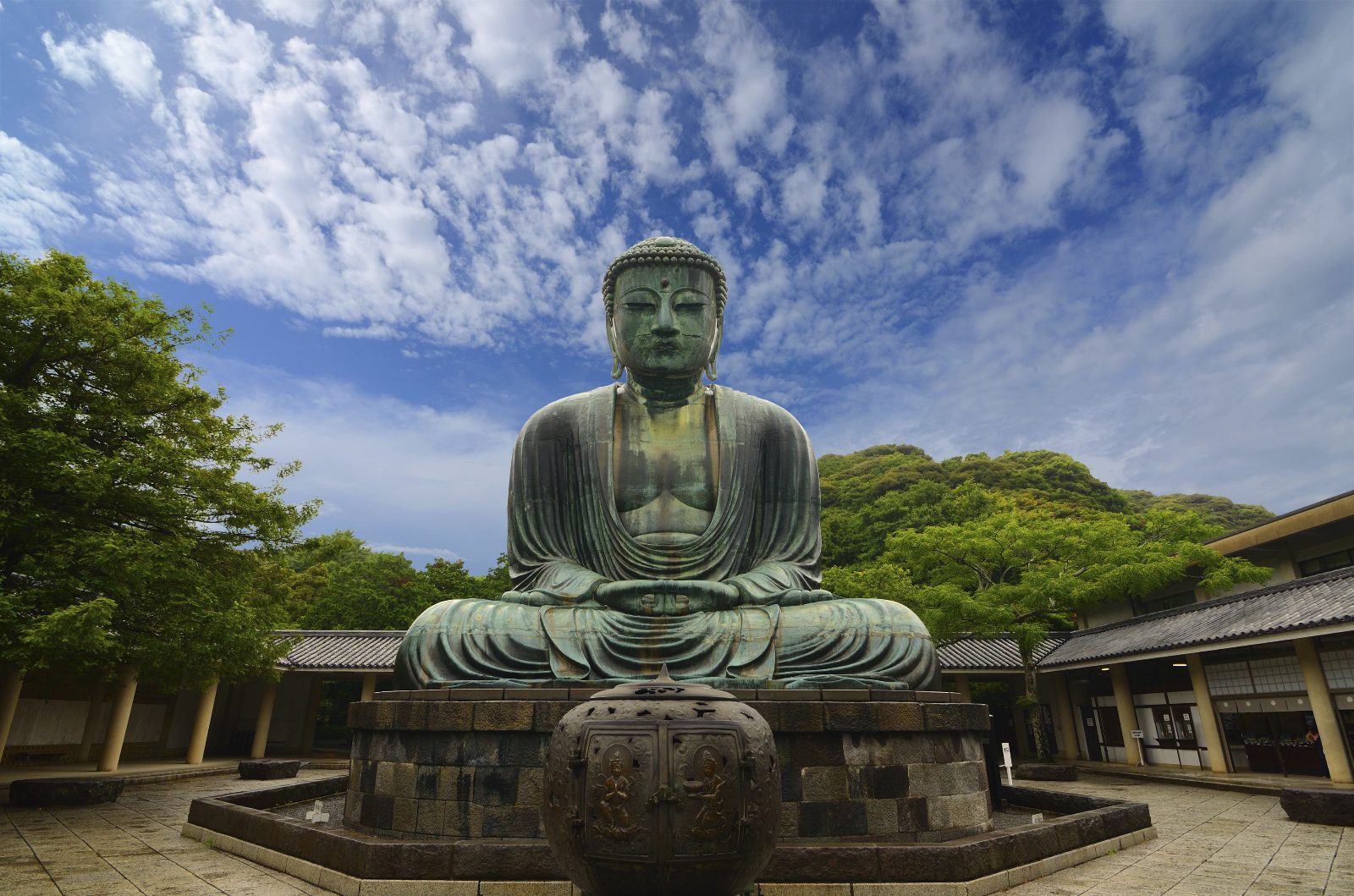
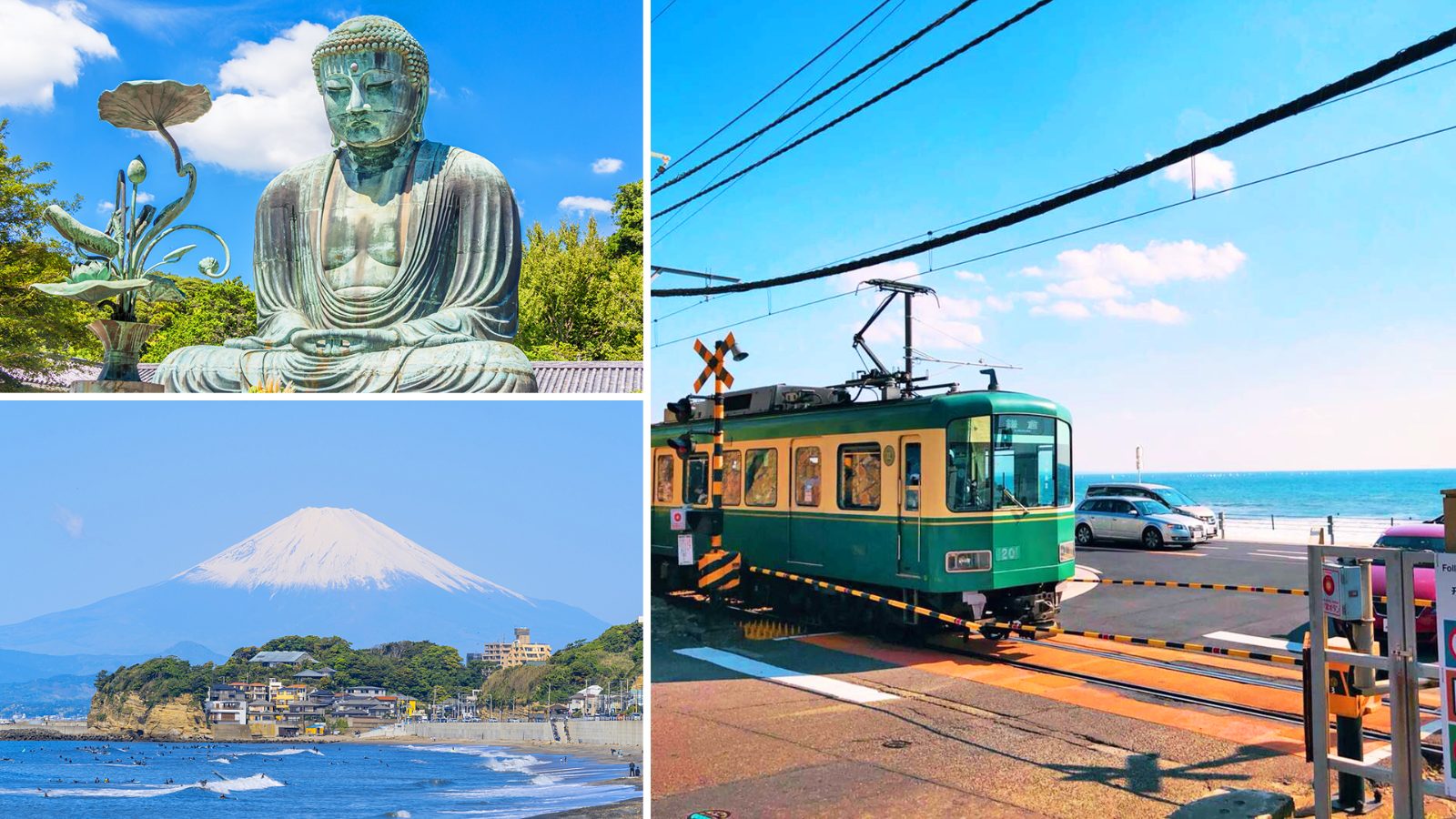
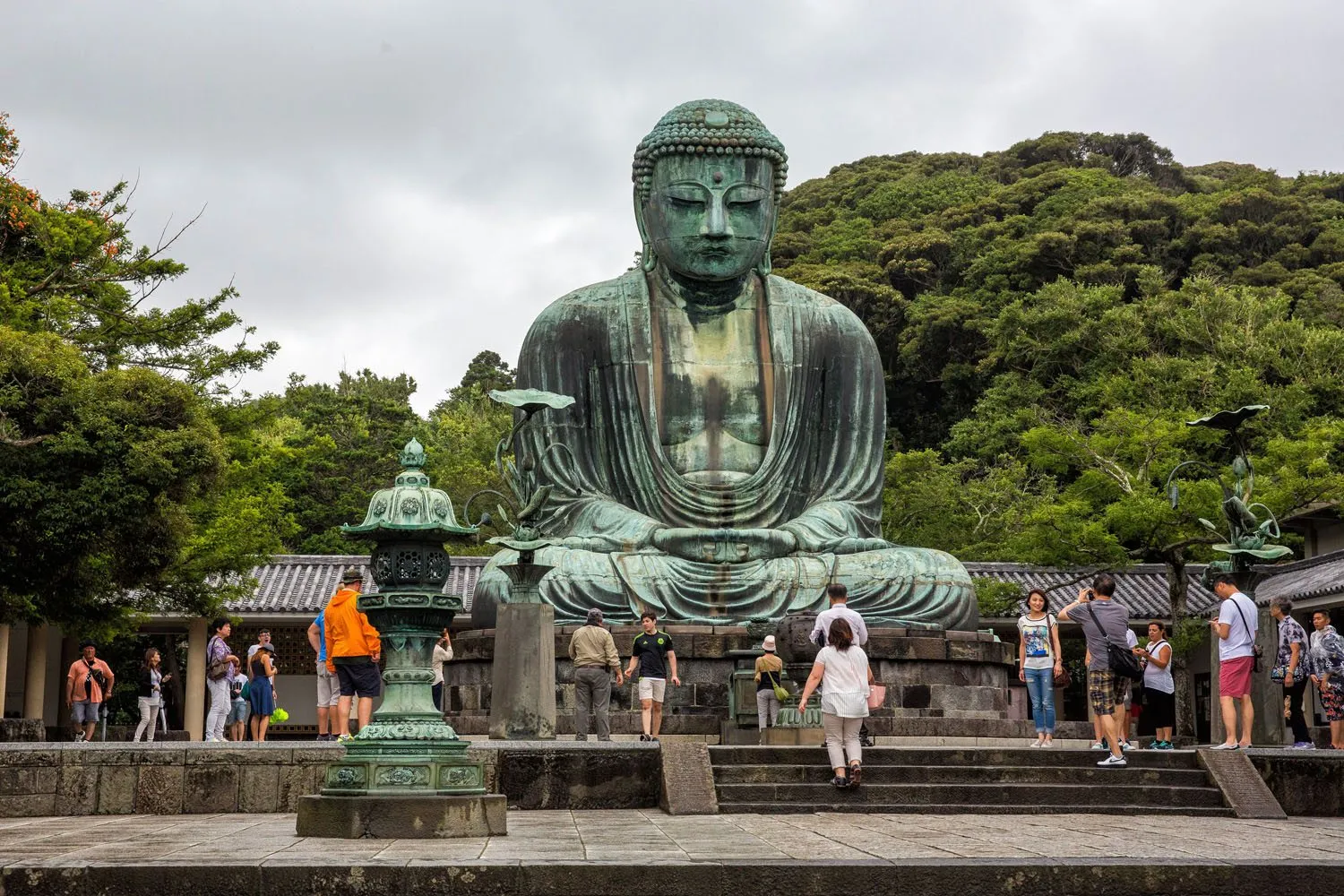
A massive 11.31-meter bronze statue dating back to 1252 that has stood in the open air for over 500 years. It remains the only National Treasure in the city of Kamakura.

Niomon Gate

Niomon Gate

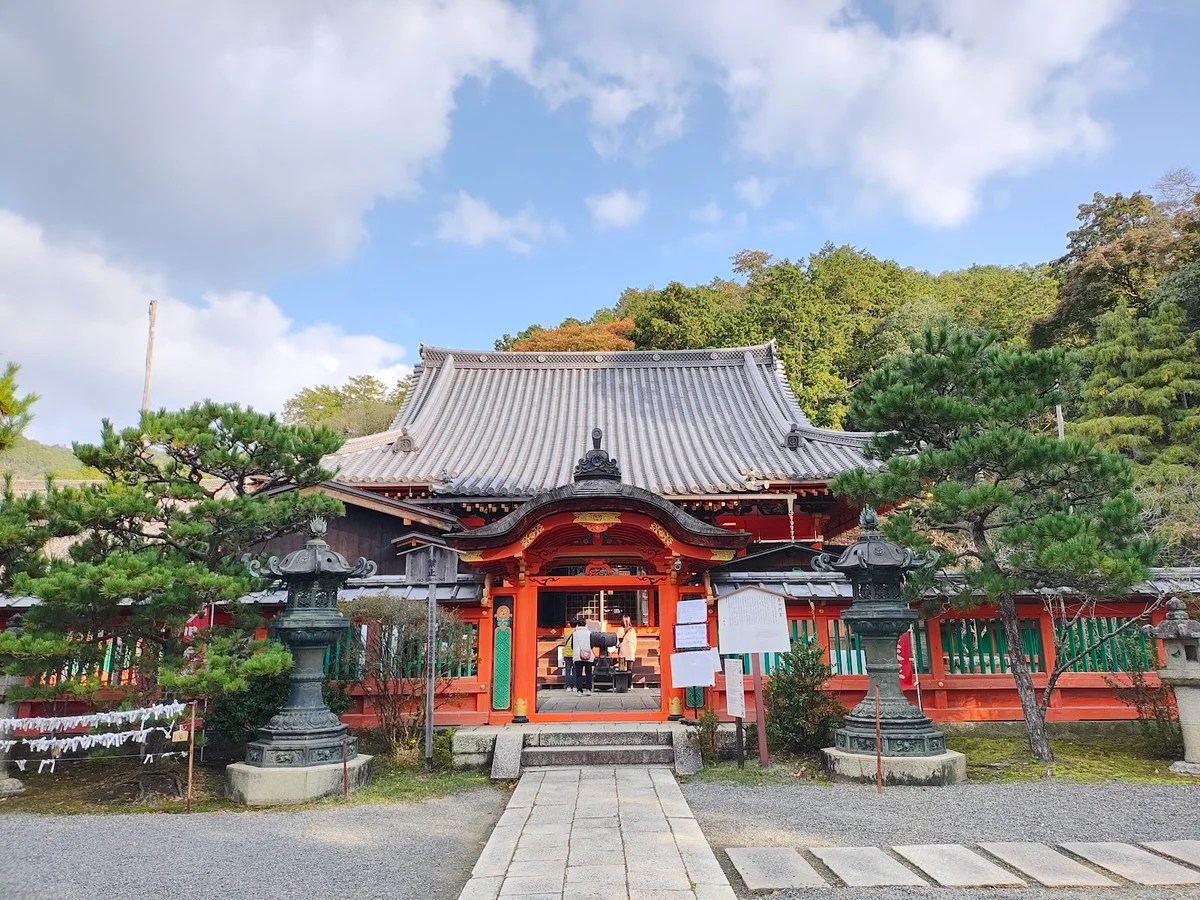
The majestic entrance gate protecting the temple grounds, featuring two guardian statues. This gate is a traditional symbol of entry into sacred spaces.

Large Waraji Straw Sandals

Large Waraji Straw Sandals

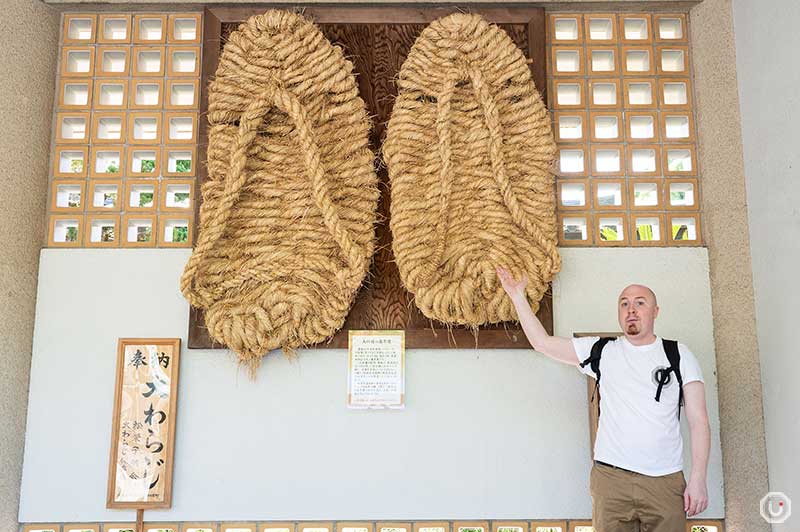
A pair of giant straw sandals (waraji) measuring approximately 1 meter, offered by children as a symbol of the Buddha's long journey. They hang in the cloister area.

Foundation Stones

Foundation Stones

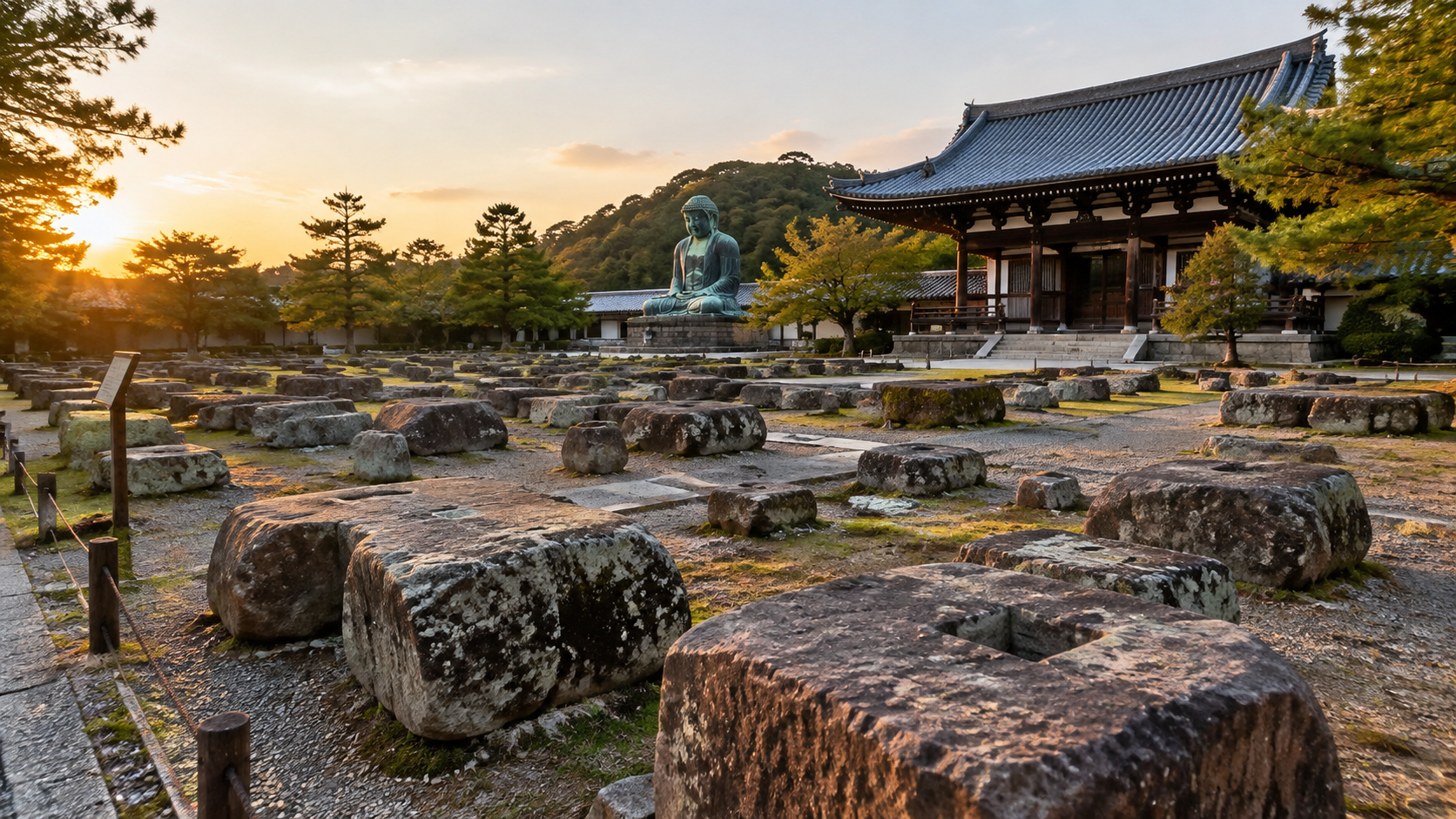
The 56 surviving stone remnants of the original Great Buddha Hall which was destroyed by tsunamis and typhoons centuries ago. They are now scattered across the temple grounds.

Literary Monuments

Literary Monuments

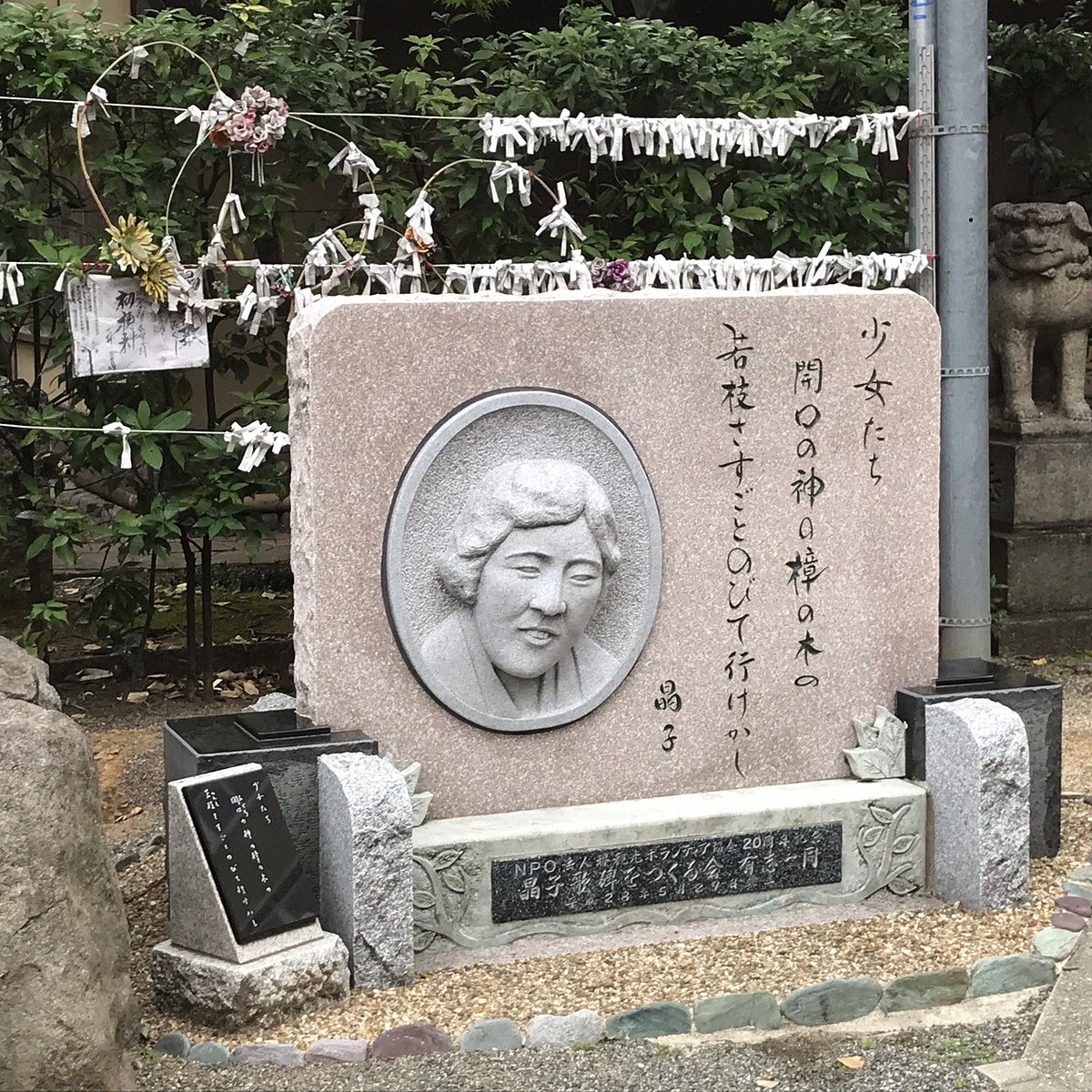
Stones inscribed with poems by famous Japanese writers like Yosano Akiko, who admired the beauty of the Buddha. These provide a poetic look at the statue's history.

The experience

What visiting Kamakura Enoshima Day Trip From Tokyo is really like

You board the JR Yokosuka Line at Tokyo Station just after eight, claiming a window seat as the train pulls south through Shinagawa and Yokohama's industrial ports. Fifty-three minutes later you step onto Kamakura Station's platform, where tour groups gather beneath the station's 1985 replica of a Meiji-era gable.

Read more Show less

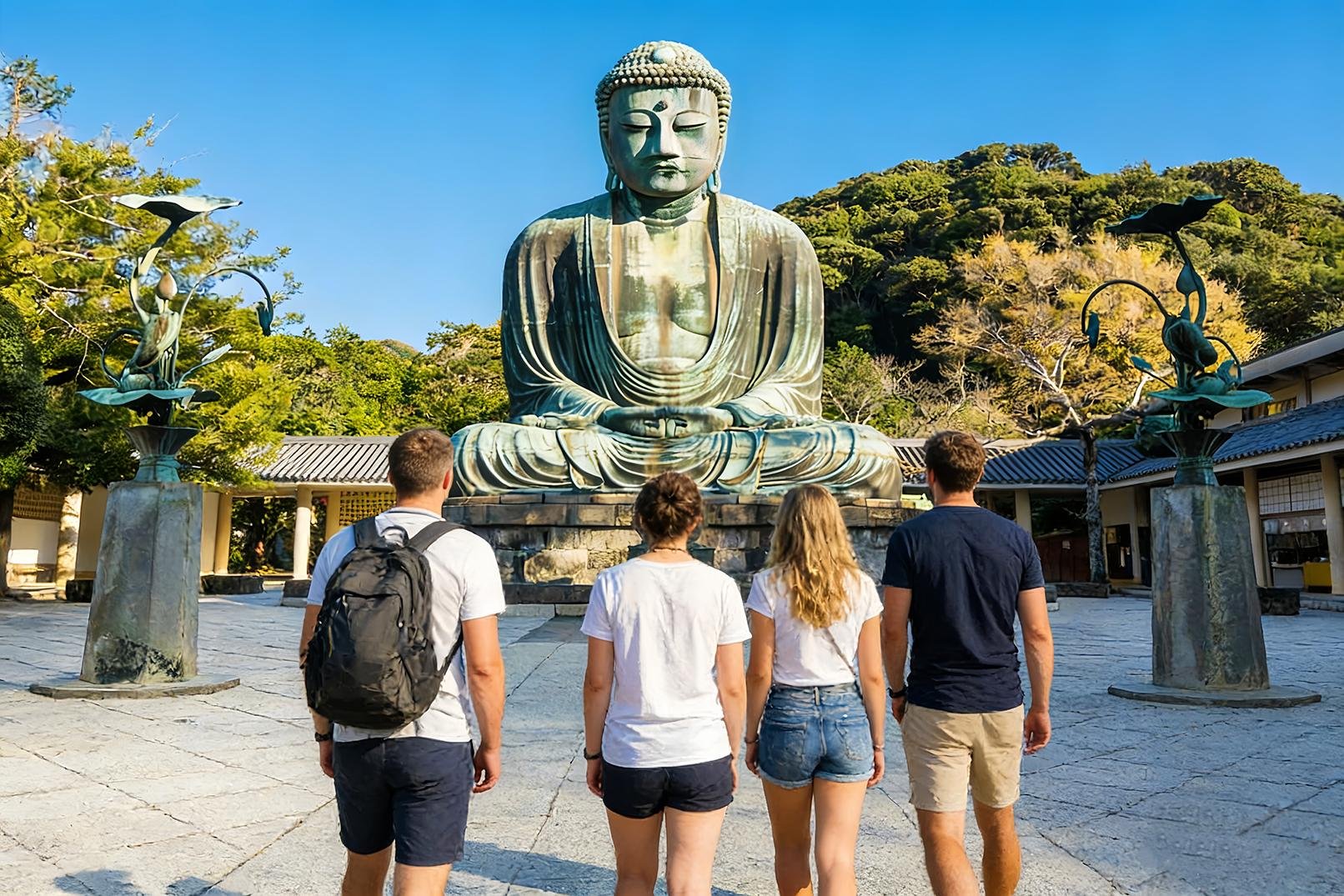
Your guide leads you west along Komachi-dori, past mochi vendors and lacquerware stalls, then turns up a stone path to Kōtoku-in. You pass through the temple gate at 300 yen and stand before the Great Buddha, its verdigris patina dark against morning clouds, hands folded in meditation mudra.

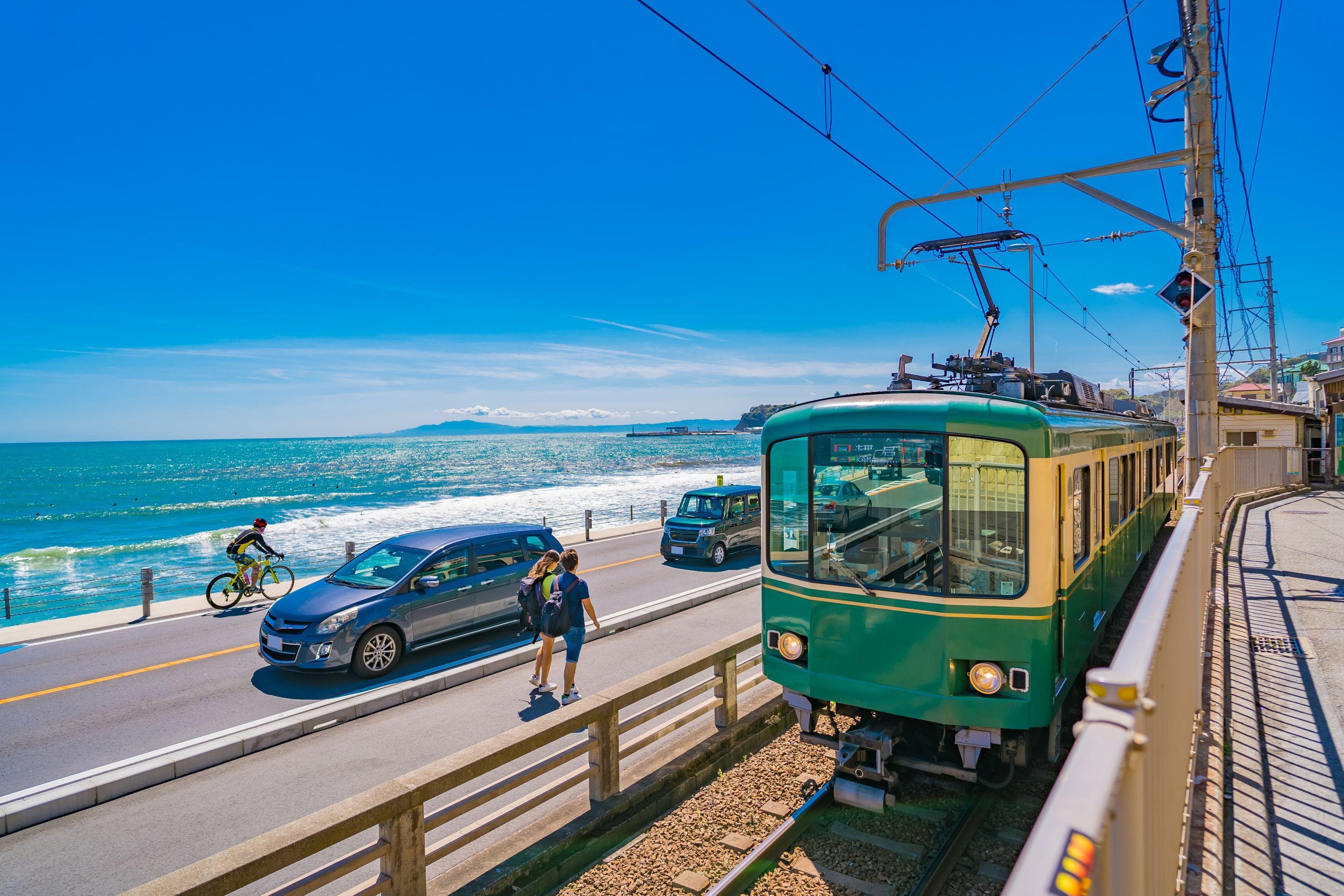
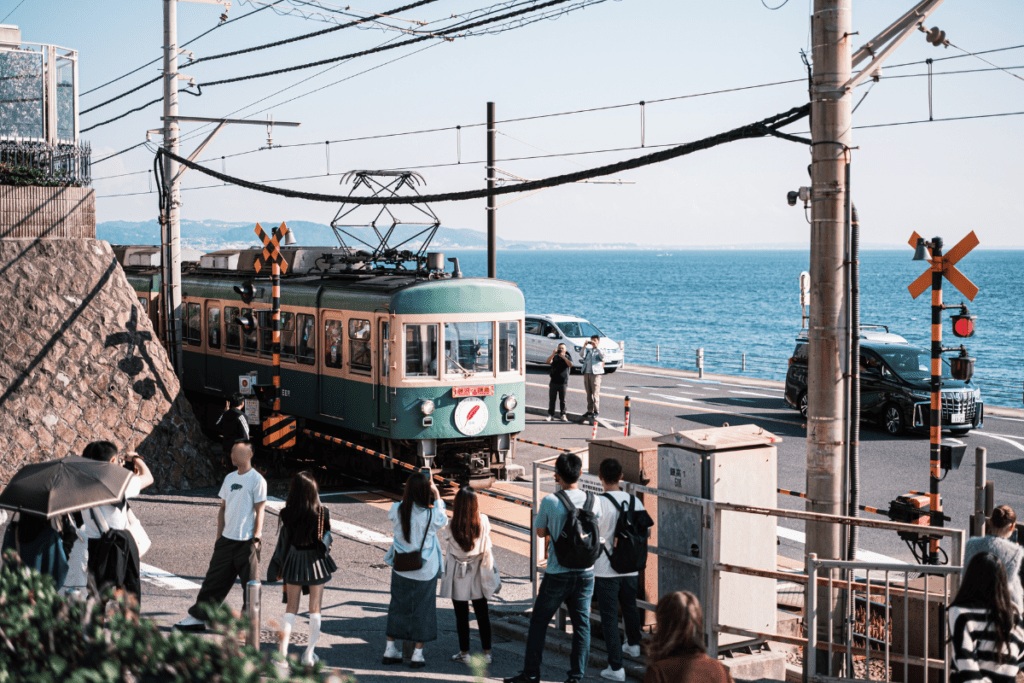
By ten-thirty you've climbed Hase-dera's hillside corridors to the Kannon Hall, where incense coils spiral above the gilded statue, then descended to the terrace overlooking Yuigahama's crescent beach. At eleven you board the Enoden at Hase Station, the green-and-cream train car swaying through tunnels of hydrangea and past fishmongers unloading crates at Shichirigahama. You cross the bridge to Enoshima at noon, ascending covered stairs lined with shrine attendants selling ema plaques and octopus crackers. The Iwaya Caves open at one, and you duck through the low stone entrance, following a lantern-lit path where mineral springs drip from the ceiling and dragon carvings flicker in the half-light. By mid-afternoon you've circled back across the bridge, the island's silhouette shrinking behind you as the train carries you north toward Tokyo's evening grid.

Kamakura Enoshima Day Trip From Tokyo
Everything You Need to Know

Your complete Kamakura Enoshima Day Trip From Tokyo guide

All the details about your upcoming adventure in one place

Kamakura became Japan's de facto capital in 1185 when Minamoto no Yoritomo established the country's first shogunate 50 kilometres southwest of Edo, the settlement that would later become Tokyo.

For 150 years the city wielded military and administrative power while Kyoto retained ceremonial authority, a division that shaped the archipelago's feudal structure. The Great Buddha at Kōtoku-in, cast in bronze in 1252 and standing 13.35 metres tall, survived the 1498 tsunami that swept away its wooden hall, leaving the Amida statue exposed to salt air and typhoons for five centuries.

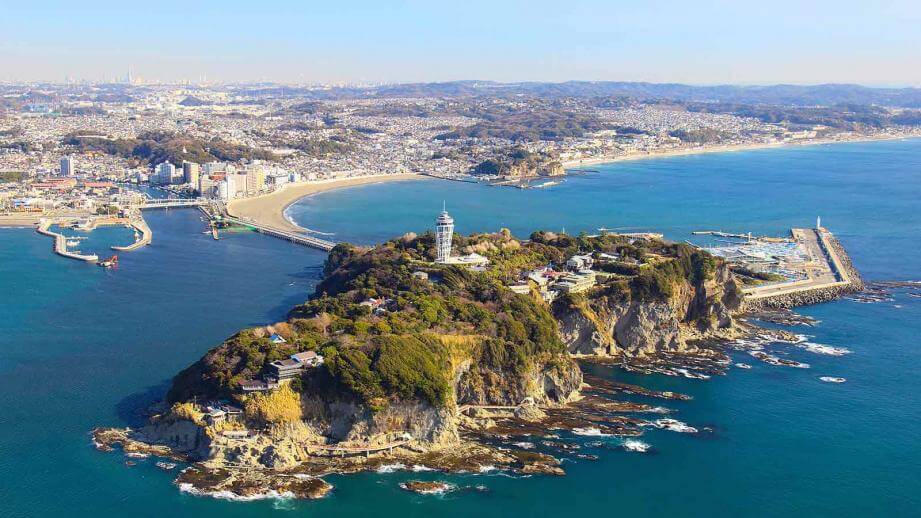
Today the Kamakura Enoshima day trip from Tokyo draws visitors along a corridor rich in Zen temples, coastal shrines, and the narrow-gauge Enoden Line, a 10-kilometre railway threading between Kamakura Station and Fujisawa since 1902. The route passes through residential streets so tight that train cars graze laundry lines, crosses tidal flats where cormorants dive for fish, and stops at Hase-dera, a hillside temple complex whose Kannon Hall houses an 9.18-metre gilded statue carved, according to temple legend, from the same camphor log that yielded Nara's Hase-dera icon in 721. Enoshima, a 600-metre-long island connected to the mainland by a pedestrian bridge since 1891, rises 60 metres above Sagami Bay and shelters three shrines dedicated to Benzaiten, the syncretic deity of water, music, and eloquence whose cult traces to a 552 arrival of Buddhist sutras on the Korean peninsula.

The twin destinations occupy different historical strata: Kamakura's temple precincts encode samurai patronage and Rinzai discipline, while Enoshima's torii gates and sea caves belong to pilgrimage traditions older than the shogunate itself. Tsurugaoka Hachimangū, the city's ceremonial heart, aligns on an axis with Yuigahama Beach two kilometres south, a design commissioned by Yoritomo in 1191 to assert divine sanction over military rule. The shrine's 61 steps ascend past a ginkgo stump marking the 1219 assassination that ended the Minamoto line, a rupture that shifted power to the Hōjō regency and cemented Kamakura's role as kingmaker rather than throne.

Kamakura Enoshima day trip from Tokyo tours typically allocate morning hours to the Great Buddha and Hase-dera before riding the Enoden coastline to the island, where the Iwaya Caves—two sea grottoes carved by wave action over 6,000 years—display lantern-lit shrines to dragon kings and Benzaiten. The itinerary compresses eight centuries of religious architecture, railway nostalgia, and tidal geography into a single loop, an efficiency that suits the transactional daytrip format while preserving each site's discrete narrative weight.

The Great Buddha survived the 1498 tsunami that swept away its hall, leaving the statue exposed for five centuries.

Dress code

Modest attire is recommended as this is a sacred site. Ensure footwear is comfortable for walking throughout the temple grounds.

Bags & security

There are no dedicated locker facilities for large luggage at the temple entrance. Keep belongings compact for a seamless kamakura enoshima day trip from tokyo.

Photography

Personal photography is permitted on the temple grounds, though tripods are often restricted. For commercial photography, you must obtain prior written permission from the temple office.

Families & strollers

The site is family-friendly, though paths can be narrow and crowded. Admission for children under age 6 is free, and the wide-open space around the Great Buddha is engaging for young visitors.

Accessibility

While the main grounds are largely flat, some areas have gravel or stone paths that may challenge wheelchair users. We recommend visiting with a companion for assistance during your kamakura enoshima day trip from tokyo.

Food & drink

Consumption of food and beverages is restricted within the sacred areas of the temple. Please use designated rest areas or visit local shops outside the gates.

Not allowed

× Smoking × Alcohol × Drones × Tripods × Loudspeakers × Pets (uncontained) × Dangerous goods × Commercial signage × Bicycles × Skateboards

What to bring

✓ Cash (for admission and Goshuin stamps) ✓ Comfortable walking shoes ✓ Sun protection ✓ Water bottle ✓ Umbrella (for sun or rain) ✓ Portable battery

Opening hours

Mon 08:00–17:30
Tue 08:00–17:30
Wed 08:00–17:30
Thu 08:00–17:30
Fri 08:00–17:30
Sat 08:00–17:30
Sun 08:00–17:30

How to get there

At a glance

Opening hours

08:00–17:30

Address

4-2-28 Hase, Kamakura-shi, Kanagawa 248-0016, Japan

Entry

300 JPY (general admission fee per adult)

Best arrival window

08:00–09:00 — early arrival avoids peak crowds and long queues for train and temple entry

Phone

+81 467-22-0703

Official site

https://www.kotoku-in.jp/

Cancellation policy

Tickets purchased for a kamakura enoshima day trip from tokyo are generally non-refundable. Please confirm specific terms with your tour operator at the time of booking.

Plan your time

Planning Your Kamakura Enoshima Day Trip From Tokyo: Timing and Crowds

Recommended time

1-1.5 hours

A kamakura enoshima day trip from tokyo requires strategic timing to navigate the Great Buddha grounds efficiently. Most visitors spend about an hour here, though those booking kamakura enoshima day trip from tokyo tours may need extra time for guided commentary near the bronze statue. Arriving early is essential to minimize wait times, as crowds surge by midday. Consider secure kamakura enoshima day trip from tokyo tickets or flexible transit passes to streamline your movement between these coastal landmarks.

Crowd levels through the day

08:00–09:00 Light
09:00–11:00 Moderate
11:00–14:00 Heavy
14:00–16:00 Moderate
16:00–17:30 Light
The story

The Centuries-Old Story of Your Kamakura Enoshima Day Trip From Tokyo

The Great Buddha of Kamakura was cast in 1252 during the Kamakura shogunate, when the city served as Japan's political capital. Minamoto Yoritomo had established his military government here in 1192, transforming a coastal fishing settlement into the seat of samurai power. The bronze statue originally stood inside a massive wooden hall funded by Lady Inada, a devotee who gathered donations from across the region. Artisans poured molten bronze in sections over several years, creating a figure that reached 13.35 meters in height and weighed approximately 121 tons. The temple hall collapsed during a storm in 1334, was rebuilt, then destroyed again by a tsunami in 1498 that swept through the Sagami Bay coastline. Rather than reconstruct the structure, monks left the Buddha exposed to the elements. This decision proved fortuitous when the 1923 Great Kanto Earthquake leveled much of the Kanto Plain yet left the statue standing. The bronze itself is a copper-tin alloy that has oxidized to its distinctive verdigris patina over seven centuries. Visitors planning a kamakura enoshima day trip from tokyo can enter the statue's hollow interior through a small doorway in its back, climbing steps to view construction marks left by medieval foundry workers. The Kotoku-in temple grounds expanded in the Edo period when pilgrimage routes linked the Great Buddha to nearby Hasedera and Tsurugaoka Hachimangu shrines. Today the site receives over a million visitors annually, many combining it with Enoshima Island as part of kamakura enoshima day trip from tokyo tours. The bronze surface shows repair patches from the 1960 restoration, when engineers stabilized the neck joint and reinforced the lotus pedestal against future seismic events.

1192

Minamoto Yoritomo establishes the Kamakura shogunate, making the city Japan's military capital.

1252

Artisans complete casting the bronze Great Buddha statue, originally housed in a wooden hall.

1334

Storm destroys the temple hall; reconstruction begins but proves temporary.

1498

Tsunami demolishes the hall permanently, leaving the Buddha in the open air.

1923

Great Kanto Earthquake strikes the region but the statue remains intact.

1960

Major restoration reinforces the neck joint and lotus pedestal against seismic damage.

Photo spots

Top Photography Locations for a Kamakura Enoshima Day Trip From Tokyo

Main Entrance Approach

Best light · Kotoku-in Great Buddha front view

Capture the bronze figure framed by the temple gates from the stone path to establish scale. This iconic composition works best before the visitor flow intensifies.;Before 09:00

Great Buddha Eye-Level Terrace

Best light · Kamakura Great Buddha face close up

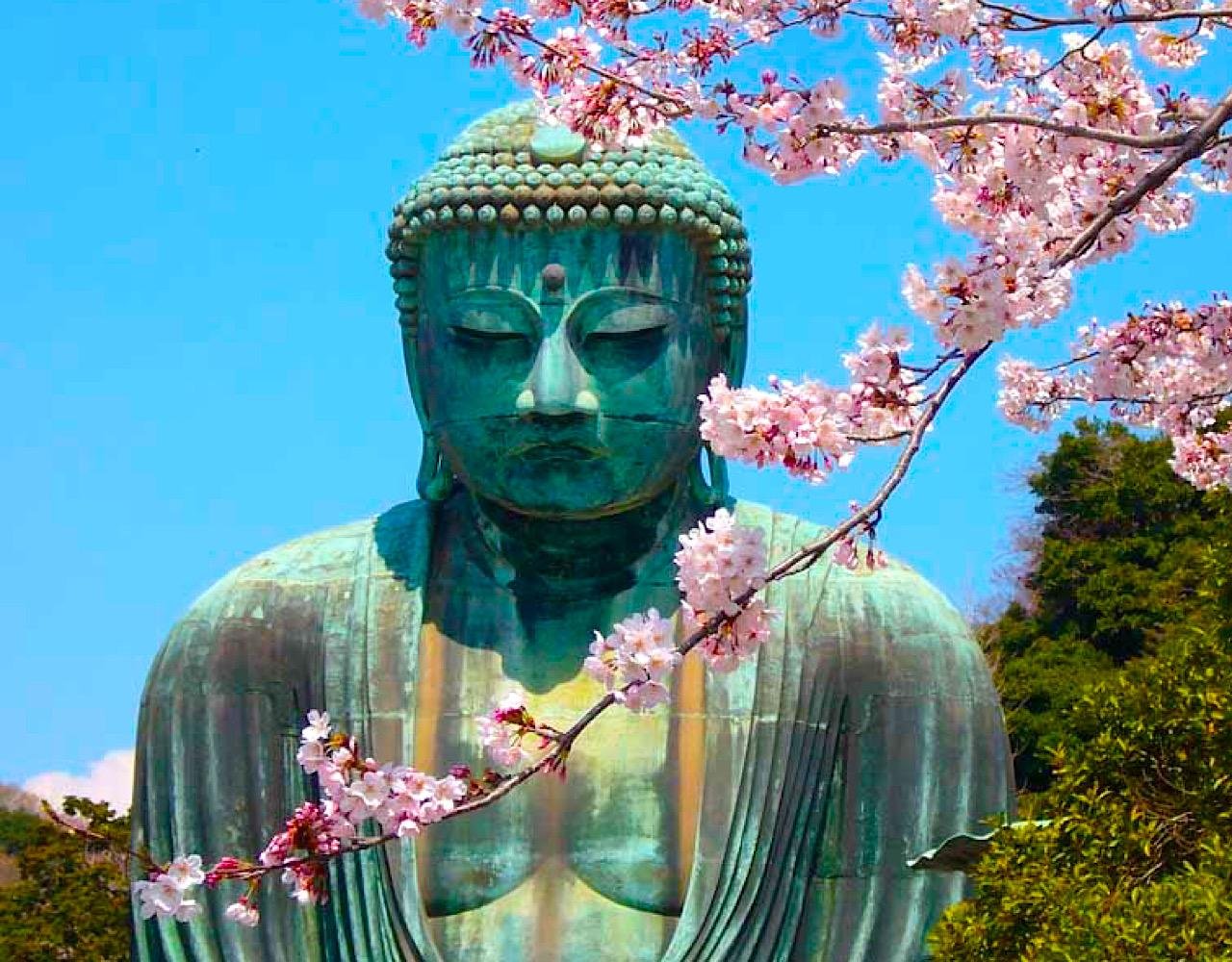
Position yourself on the slightly elevated ground to the left of the statue to emphasize the serene facial expression and the unique casting lines. This vantage point provides a clear view of the iconic monumental sculpture during a kamakura enoshima day trip from tokyo.;Morning light

Mudra Hand Detail

Best light · Great Buddha hand mudra detail

Move to the right side of the courtyard to isolate the hands resting in the dhyana mudra position. Using a longer focal length allows you to compress the image against the backdrop of the trees.;Mid-morning

Temple Courtyard Perimeter

Best light · Kotoku-in garden landscape photography

Walk along the back of the monument to photograph the interaction between the weathered copper patina and the surrounding Japanese maples. This area offers creative angles for those seeking alternatives to standard kamakura enoshima day trip from tokyo tours imagery.;Golden hour

Gallery

Moments from Kamakura Enoshima Day Trip From Tokyo

With kids

Visiting Kamakura Enoshima Day Trip From Tokyo with kids

Planning a kamakura enoshima day trip from tokyo offers families a manageable pace to explore coastal temples and iconic bronze statues. Early travel ensures a smooth experience for children before the region becomes crowded.

Strollers

While the main paths are paved, the site includes stone steps that can be difficult for strollers, so a baby carrier is recommended for your kamakura enoshima day trip from tokyo tour.

Facilities

The grounds are maintained to a high standard, though baby-changing stations are limited; it is wise to handle diaper needs at the larger train stations before you arrive to secure kamakura enoshima day trip from tokyo tickets or transit passes.

Best ages

School-aged children often find the sheer scale of the Great Buddha engaging, while toddlers benefit from the open courtyards available during your kamakura enoshima day trip from tokyo tours.

Pacing

We recommend the best arrival window of 08:00–09:00 to complete your visit in approximately 45 minutes, leaving plenty of time to explore the seaside and local shrines.

Food & drink

Where to Eat Near Your Kamakura Enoshima Day Trip From Tokyo Stop

Dining options near the Great Buddha are plentiful, making it convenient to grab a meal during your kamakura enoshima day trip from tokyo. While there are no eateries inside the temple grounds, a short walk toward Hase Station reveals numerous local cafes and bistros.

Kannon Coffee Kamakura

€€

Cafe — 3 min walk

Known for artistic lattes and seasonal crepes, this is a popular stop for those booking kamakura enoshima day trip from tokyo tours. The small shop is ideal for a quick energy boost before continuing your coastal itinerary.;Kamakura Hase-no-Eki

FAQ

Kamakura Enoshima Day Trip From Tokyo — frequently asked questions

Everything you need to know for your journey

Ready for Adventure?

Join thousands of happy travelers who have discovered this incredible experience

Book Your Experience Now